Would you like to browse our deck tile products and accessories?
When most people start researching deck tiles for a rooftop or balcony, they quickly run into three main materials: porcelain, wood-plastic composite (WPC), and recycled plastic. Each looks great in the photos. Each has fans. And each fits a very different use case.
This guide is the honest side-by-side comparison — cost, look, durability, maintenance, and where each one actually makes sense. By the end you should know exactly which material fits your space.
The Short Answer
Porcelain delivers the premium, modern-stone look at the highest price point and the best long-term durability. WPC gives you the warmth of real wood with much less maintenance at a mid-range price. Recycled plastic is the budget-friendly, eco-conscious choice that surprises people with how good it looks and how well it holds up.
Which one is right for you depends less on “which is best” and more on how you plan to use the space.
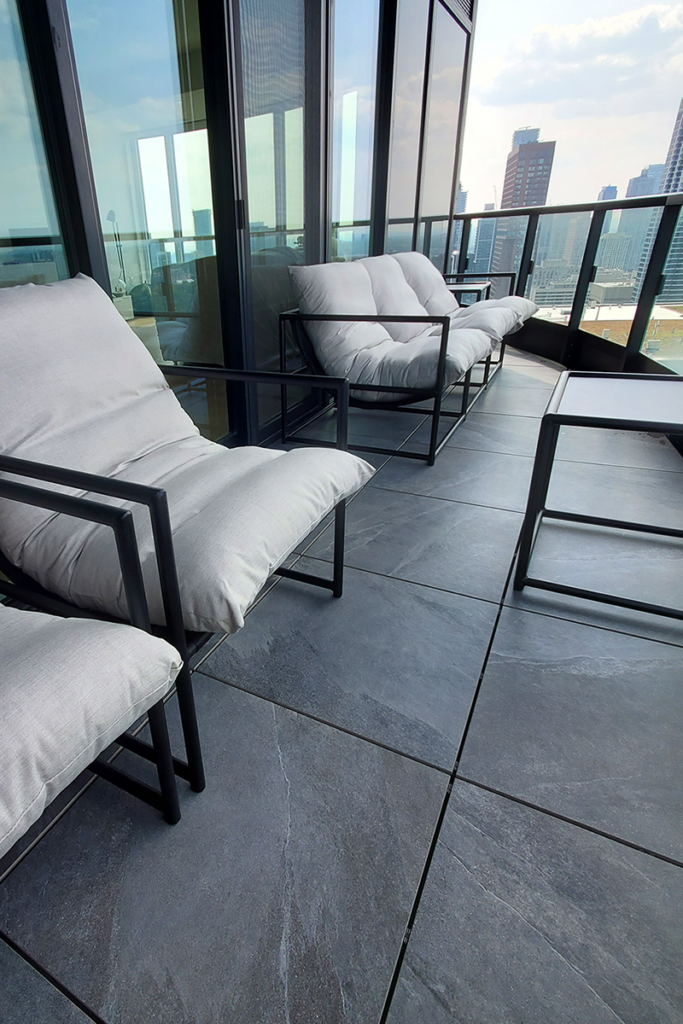
Porcelain Deck Tiles
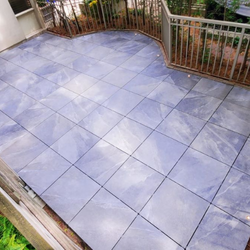
Porcelain tiles are fired-clay tiles with a dense, non-porous surface — the same material used for high-end indoor flooring, adapted for outdoor use. Designer Deck’s porcelain line (Porsets) sits on a proprietary structural support system that keeps water flowing underneath and eliminates the need for separate pedestals.
The look is modern, sleek, and stone-like. Porcelain delivers the aesthetic most people associate with high-end European rooftops — clean lines, large-format finishes, marble or travertine looks, and a surface that does not fade in sunlight.
Porcelain is the most durable of the three. It does not absorb water, does not fade, does not scratch easily, and handles Canadian freeze-thaw cycles without degradation. A porcelain rooftop installed today should look the same in 20 years.
Price point: premium. Porcelain sits at the top of our product range, which is why it is the choice for high-end rooftop terraces, penthouse condos, and commercial projects.
Best for: rooftop terraces where the look matters as much as the function. Entertaining spaces. Penthouses. Projects where the client would otherwise be looking at pedestal paver systems.
Wood-plastic Composite (WPC) Deck Tiles
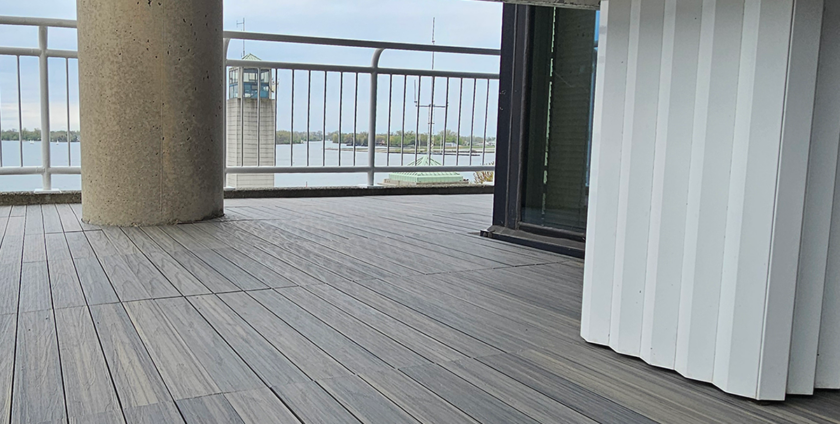
WPC tiles combine wood fibres with recycled plastic, bonded into a solid tile that looks remarkably like real wood. Designer Deck’s WPC line — the Opulent Collection — is engineered specifically for Canadian conditions.
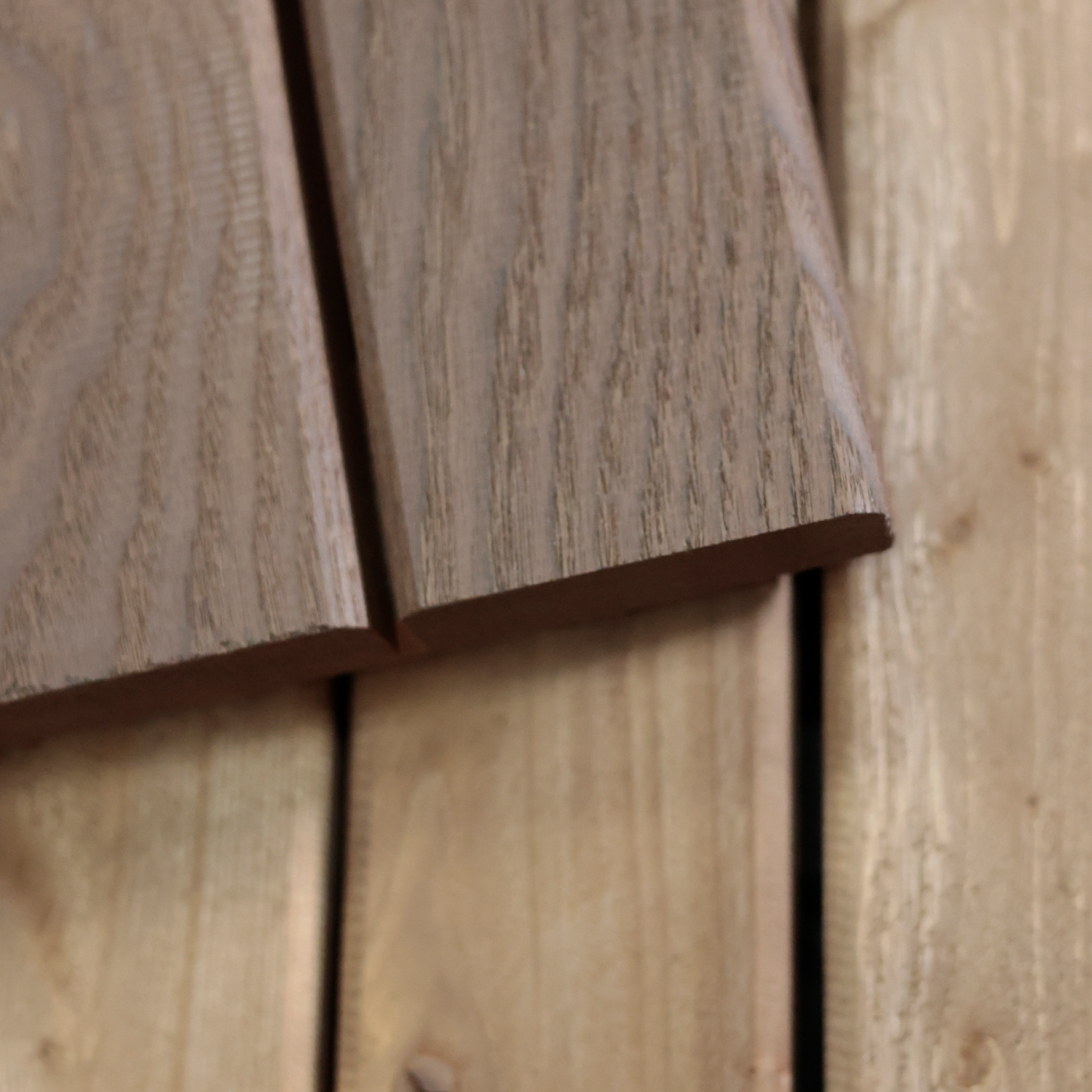
The look is warm, textured, and wood-like. If you want the look of a cedar deck without the maintenance of real wood, this is the material. WPC tiles come in wide-board and narrow-board patterns and several wood-tone colours.
Durability is very good. WPC holds up well in sun and rain and does not require the oiling and staining that real wood demands. One caveat — because WPC contains wood fibres, when tiles are cut into during installation, those cut edges can be more susceptible to moisture intrusion over time. Quality installation with sealed cuts addresses this.
Price point: mid-range. WPC sits between recycled plastic and porcelain — more premium than pure plastic, less premium than porcelain or hardwood.
Best for: homeowners who want the real-wood look without real-wood maintenance. Condo balconies where warmth and texture matter. Rooftops that want a residential feel rather than a commercial one.
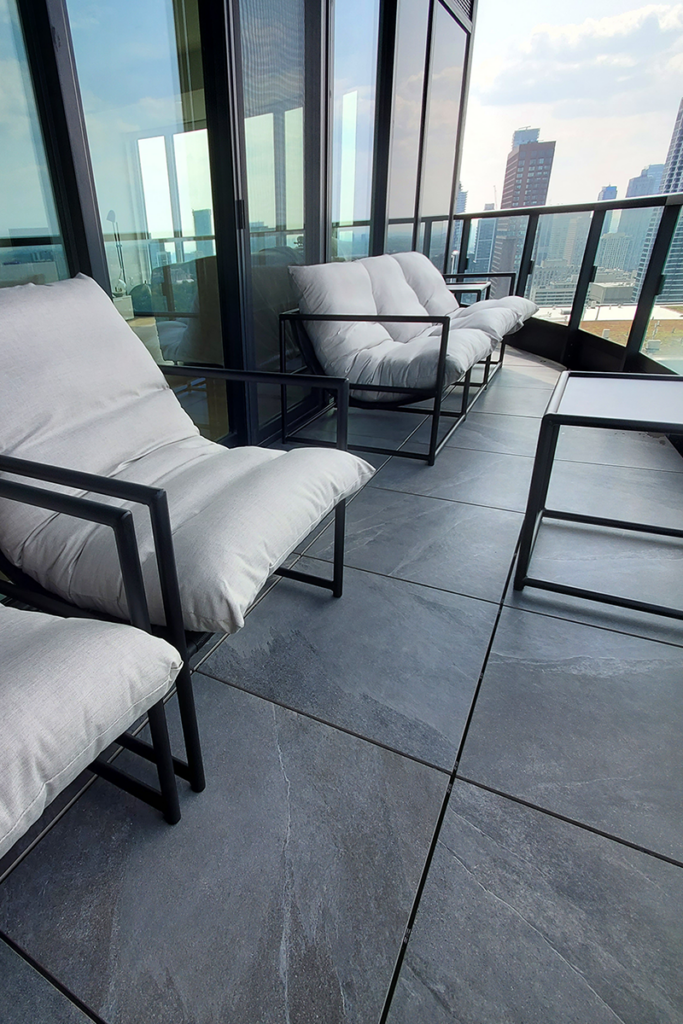
Recycled Plastic Deck Tiles
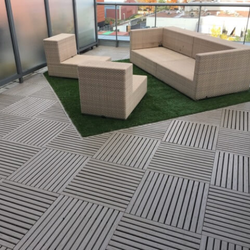
100% recycled plastic — no wood fibres, no composite blending. Designer Deck’s recycled plastic line comes in two collections (the Vivid wide-board and the Contour narrow-board) and is made from recycled material.
The look is cleaner and more contemporary than you might expect. Modern recycled plastic tiles have come a long way in both appearance and performance. The surface has realistic wood-grain texture, the colours are rich, and the overall look works beautifully in urban condo settings.
Durability is excellent, and in one important way better than WPC: pure plastic cannot grow mold or mildew. Because there are no wood fibres, cut edges have nothing for moisture to penetrate. UV inhibitors protect against sun fading. Recycled plastic also handles freeze-thaw cycles extremely well.
Price point: budget-friendly. This is typically the most cost-effective option across our product lines, while still delivering the drainage, UV protection, and Canadian-made quality you get across the whole range.
Best for: rental-property owners, landlords finishing balconies, eco-conscious buyers, and anyone who wants a great-looking result at the best price. Also strong for commercial applications where many units need finishing on a predictable budget.
Side-by-side Summary
- Look: Porcelain = premium stone; WPC = real wood warmth; Recycled plastic = clean modern
- Price: Porcelain = premium; WPC = mid-range; Recycled plastic = budget-friendly
- Durability: Porcelain = best; WPC = very good; Recycled plastic = excellent and mold-proof
- Maintenance: Porcelain = lowest; WPC = low; Recycled plastic = lowest
- Environmental: Recycled plastic = most eco-friendly; WPC = partial recycled content; Porcelain = durable goods
- Weight: Porcelain = heaviest; WPC = moderate; Recycled plastic = lightest
Which One Should You Actually Choose?
If budget is your main constraint, choose recycled plastic. You will get a finished, beautiful balcony or rooftop for less than you expected, and the tiles will last for many years.
If you want real-wood warmth without real-wood hassle, choose WPC. It is the most popular choice for residential condo balconies in Toronto for this exact reason.
If the rooftop is a showpiece — a penthouse terrace, a primary entertaining space, a rooftop you will be photographing — choose porcelain. It is the best looking and the most durable, and it costs less than the pedestal paver systems that deliver a similar aesthetic.
Frequently Asked Questions
Ques: Can I mix different deck tile materials in one space?
Ans: Yes. Designer Deck offers mix-and-match installations — porcelain with grass inserts, WPC with recycled plastic borders, and more. This is one of the most creative ways to personalize a rooftop.
Ques: Which one is best for Canadian winters?
Ans: All three handle Canadian freeze-thaw cycles well when made to Canadian specs. Porcelain is the most inert; recycled plastic is the most flexible; WPC sits in the middle.
Ques: Do any of these get too hot in summer?
Ans: Lighter colours stay cooler than dark colours across all three materials. Recycled plastic and WPC in mid-tone and light colours stay comfortable barefoot for most of the Ontario summer.
Ques: How long do each of these last?
Ans: All three come with Designer Deck warranties and are engineered for long-term outdoor use. Porcelain has the longest effective lifespan, but all three products are made to last decades when properly installed.