Would you like to browse our deck tile products and accessories?
Toronto condo rooftops are some of the most underused spaces in the city. Hundreds of buildings have private terraces, shared rooftops, and penthouse decks that sit as bare concrete for years because owners do not know where to start.
Here is a collection of rooftop patio ideas — from small intimate terraces to large entertaining spaces — grouped by use case, with notes on what each one typically costs and which products fit best.
The Small Private Terrace (Under 200 Sq Ft)
A small terrace is a morning coffee spot and an evening cocktail spot. The goal is a complete, defined space rather than a sparse one.
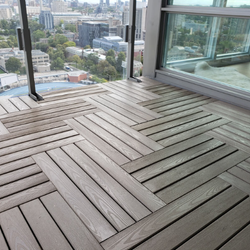
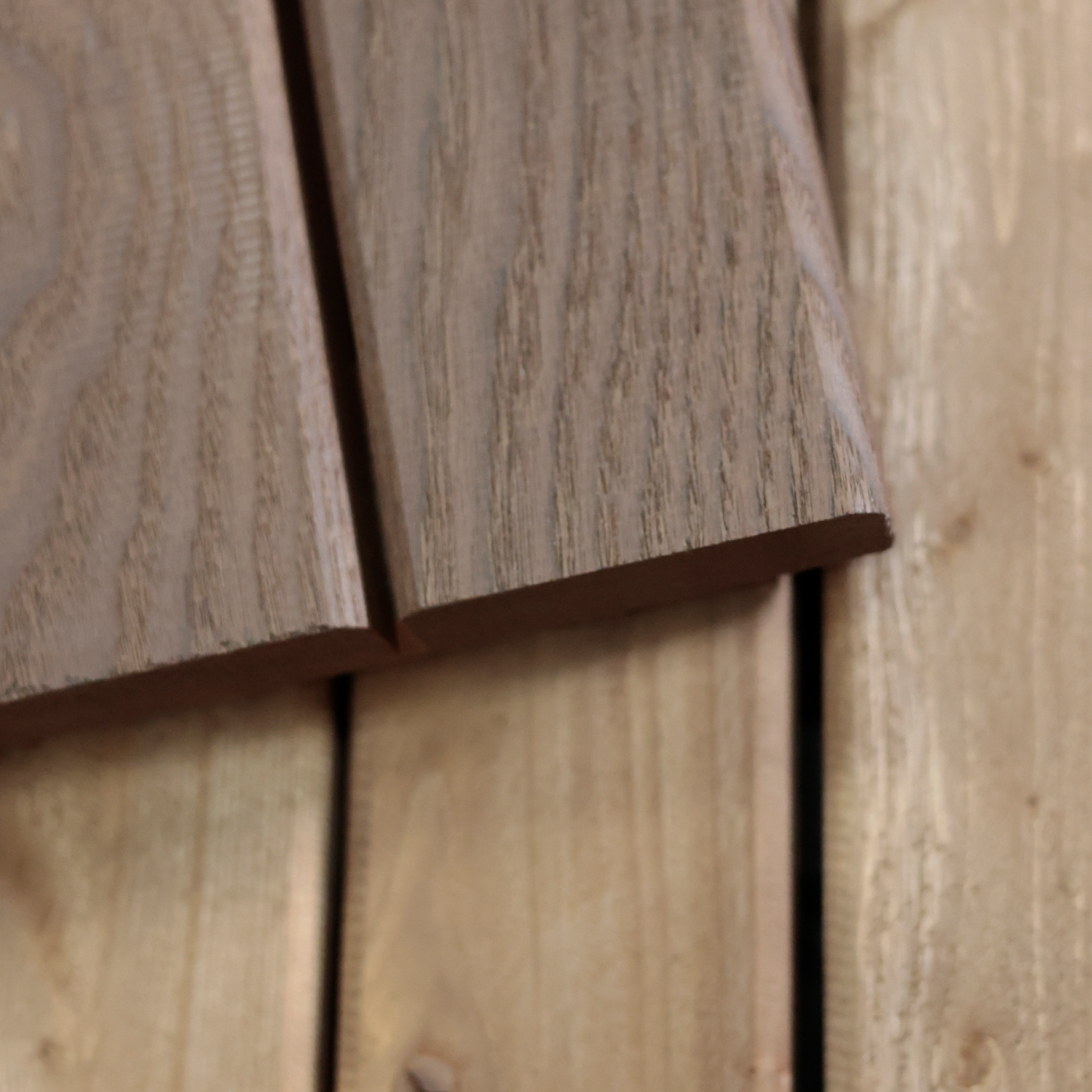
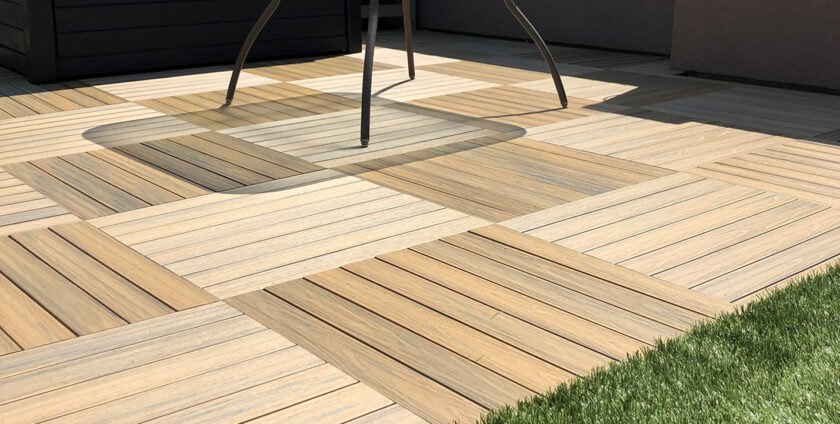
1. Design approach: Full tile coverage in a warm WPC wood-grain. One outdoor sofa or loveseat against the privacy wall. A low coffee table or storage ottoman. Two or three large planters framing the seating area. String lights along the railing. That is the whole design.
2. Budget range: Falls in the budget-to-mid-range band for the floor; furniture budgets are separate and vary widely.
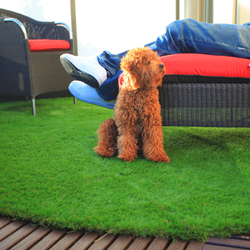
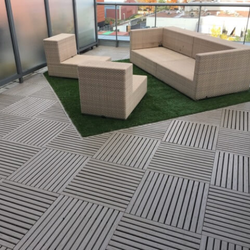
3. Best products: WPC (Opulent Collection) for most small terraces. Recycled plastic (Vivid or Contour Collection) for tighter budgets. Grass inserts along one edge for a natural touch.
The Penthouse Entertaining Deck (400–800 Sq Ft)
Penthouse terraces are typically the rooftop for the whole unit. They host dinners, drinks, and summer parties. The floor becomes the stage for everything else.
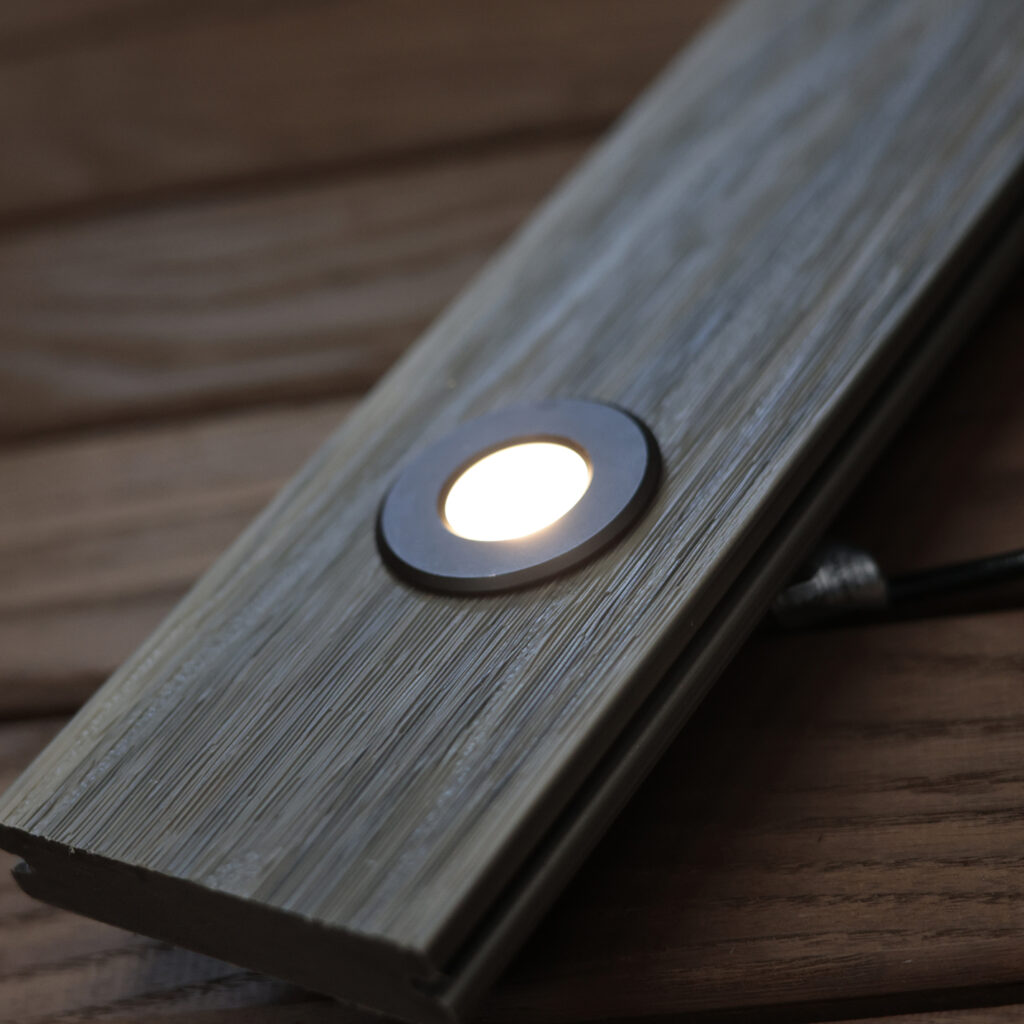
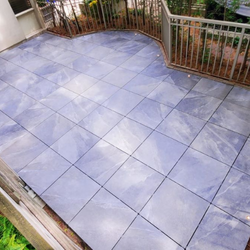
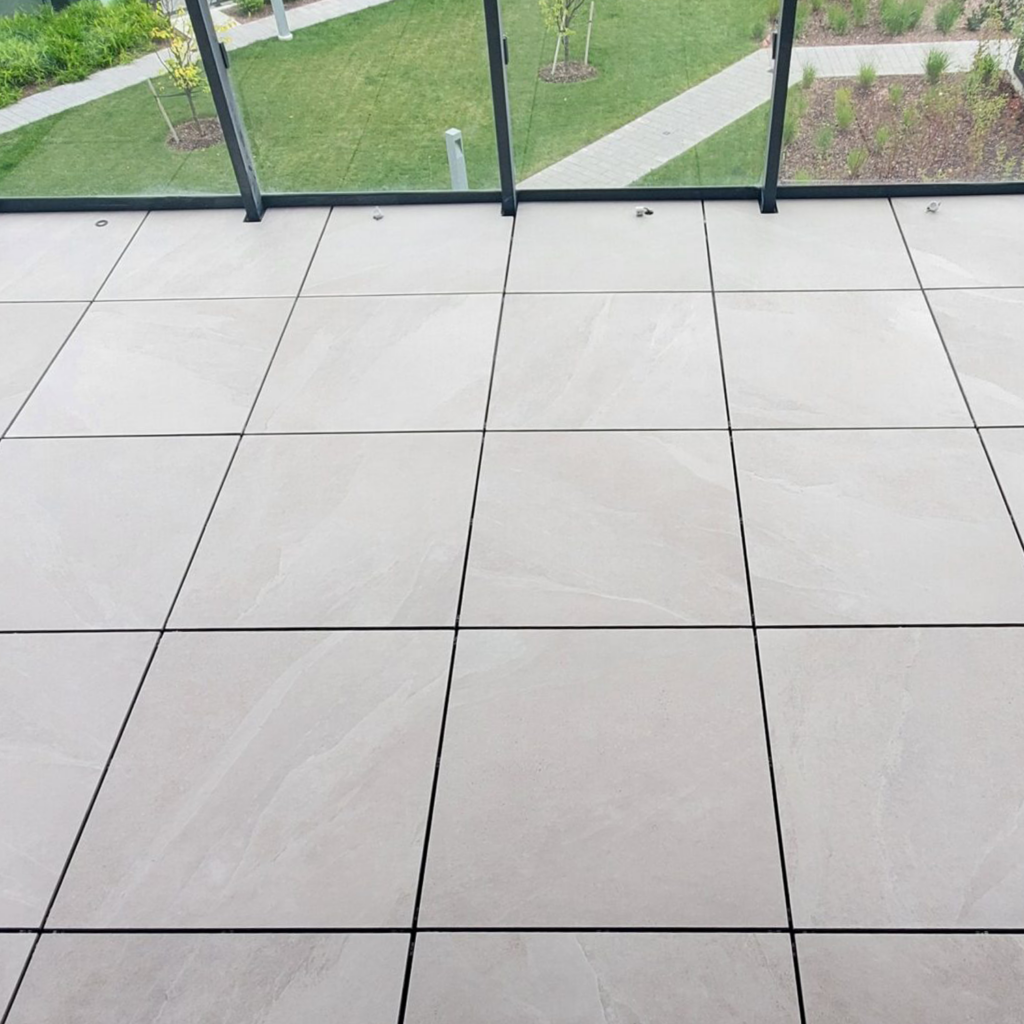
1. Design approach: Full coverage in elevated porcelain for a premium stone look, or premium WPC for a warmer residential feel. Zones — a dining zone with a six-person table, a lounge zone with outdoor sofas, a bar zone near the door. LED ambient lighting integrated into the installation. Tall planters and potentially a pergola for shade.
2. Budget range: Mid-range to premium depending on product and square footage.
3. Best products: Elevated porcelain tiles (Porsets line) for the showpiece finish. Consider grass-insert borders to define zones. LED lighting throughout.
The Townhome Rooftop Deck (200–500 Sq Ft)
Stacked townhomes in Toronto increasingly come with dedicated rooftop decks — usually accessed from the top floor via a bulkhead door. These spaces are private but often bare concrete with a rough pea-gravel cover.
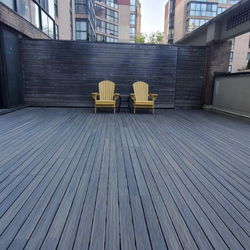
1. Design approach: Replace the pea gravel with interlocking tiles. Add a perimeter bench for seating and storage. A small dining set for four. Privacy screens on the sightlines to neighboring units. Low planters that will not catch wind.
2. Budget range: Mid-range, and often the most cost-effective investment a townhome owner can make in the outdoor space.
3. Best products: WPC or recycled plastic depending on budget. Both handle townhome rooftop conditions well.
The Shared Condo Rooftop Amenity
Some buildings have large shared rooftops with pools, lounges, or BBQ areas. These are corporation projects, not individual owner projects, but they use the same products and approach.
1. Design approach: Durability and slip resistance become bigger factors than aesthetics alone. Porcelain handles high traffic and is non-absorbent around pools. Zoning becomes critical — pool deck, lounge area, dining area, BBQ area each define themselves with tile choice or layout.
2. Budget range: Commercial budgets, but the per-sq-ft cost is often lower than residential because of scale.
The Tiny Rooftop Patio (Under 60 Sq Ft)
Some downtown condos have tiny rooftop access patios — just enough space for a bistro table and two chairs. These still benefit from full treatment.
1. Design approach: Full tile coverage (the whole space should feel finished). One bistro set. One or two planters. One source of ambient light. That is the whole design. Small does not need to mean unfinished.
2. Budget range: Budget-friendly due to the small square footage.
3. Best products: Recycled plastic or pressure-treated wood. The smaller the space, the less the per-sq-ft price matters.
Design Themes That Work on Toronto Rooftops
1. Modern urban: Porcelain tiles in grey or charcoal. Black metal planters. White or grey outdoor furniture. Minimal plants, high impact.
2. Warm Scandinavian: WPC in a medium wood tone. Light-coloured linen cushions. Wooden planters with tall grasses. Warm Edison-bulb string lights.
3. Natural garden: Mix WPC or recycled plastic with grass-insert tiles. Multiple planters with varied heights. Wooden or rattan furniture.
4. Mediterranean: Porcelain in travertine tones. Terracotta planters. Wrought-iron bistro furniture. Citrus trees in large pots.

What to Plan Before You Design?
- Check your condo corporation rules (see our condo approval guide)
- Verify weight limits for the rooftop
- Note sun/shade patterns across the day
- Check wind conditions — tall buildings get serious wind
- Identify drain locations and keep them accessible
- Think about winter storage for furniture and cushions
Frequently Asked Questions
Ques: What is the most popular rooftop design for Toronto condos?
Ans: Full WPC tile coverage with one dining zone, one lounge zone, and integrated lighting is the most common mid-range approach. Penthouses tend toward porcelain.
Ques: How long does a full rooftop transformation take?
Ans: Tile installation is typically one to three days. Furniture and plants can be added the same week.
Ques: Can I design the rooftop myself or do I need a designer?
Ans: Designer Deck consultations include design guidance as part of the quote process. Dedicated interior designers are common for premium and penthouse projects but not required for most rooftops.
Ques: Do I need a pergola or shade structure?
Ans: For south- and west-facing rooftops that get intense summer sun, yes. For partially shaded or north-facing rooftops, it depends on how you use the space.