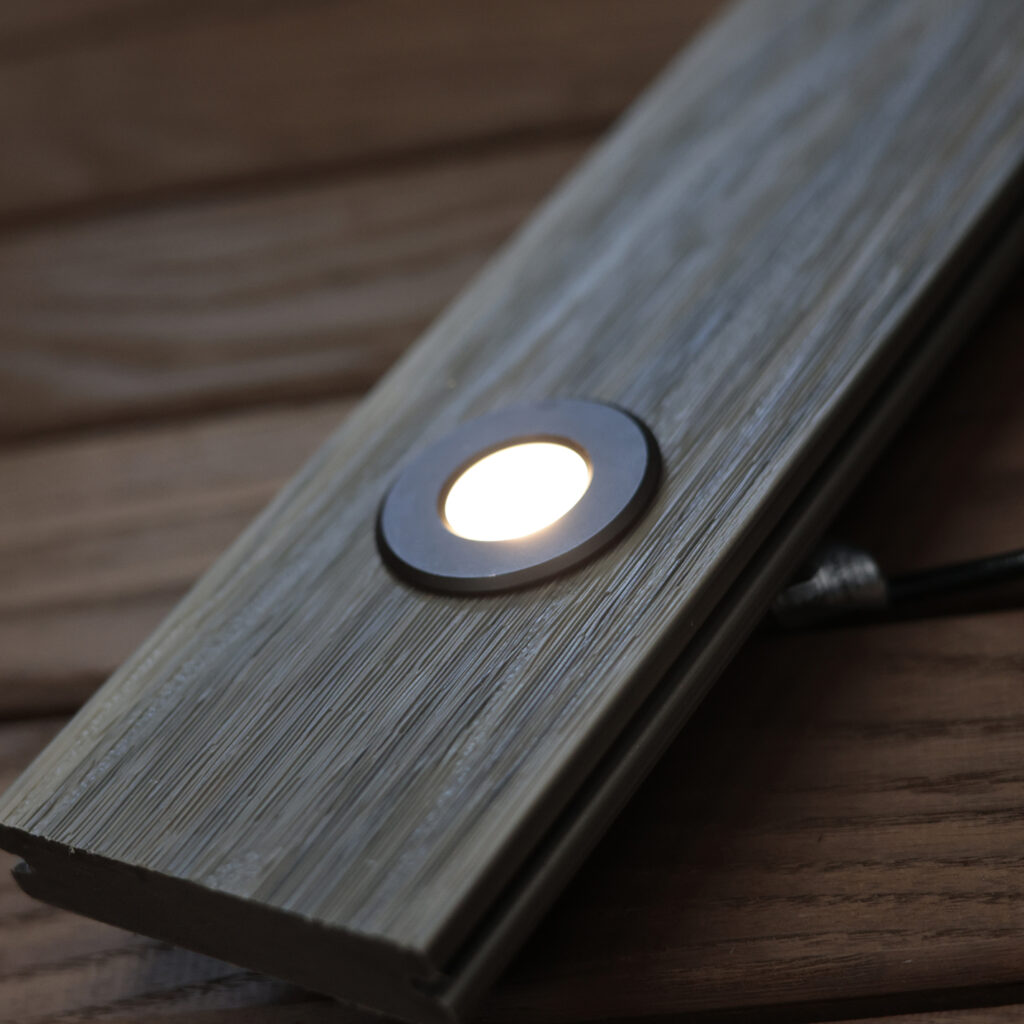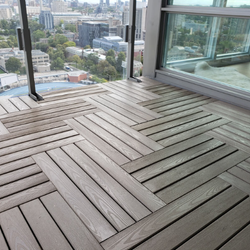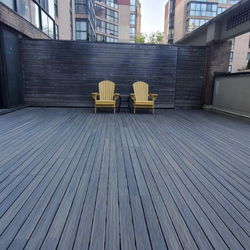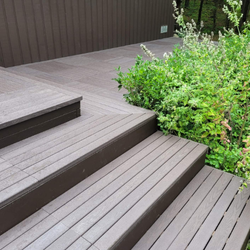
Would you like to browse our deck tile products and accessories?
If you own a condo in Toronto, you have probably wondered how much you are actually allowed to do to your own balcony. The short answer is: more than you think, if you choose the right product. The longer answer is worth understanding, because getting this wrong can mean being ordered to remove an installation and pay for slab repair.
Here is the straight guide to Toronto condo balcony rules, why interlocking deck tiles almost always pass, and how to handle the approval process cleanly.
What You Legally Own In A Condo?
In Ontario, condo owners typically own the interior of their unit (the airspace between the walls, floor, and ceiling). The balcony is almost always an “exclusive-use common element” — meaning you have exclusive rights to use it, but the corporation owns the structure. The slab, the railing, the waterproof membrane, and the exterior appearance are the corporation’s responsibility. That is why most meaningful changes to a balcony require board approval.
What Typically Gets Automatically Rejected?
- Anything that penetrates the slab (screws, anchors, framed decks)
- Anything that obstructs drainage channels or drains
- Anything permanent that changes the exterior appearance (painted slabs, epoxy coatings)
- Anything that blocks access to window-washing anchors, utility boxes, or fire hatches
- Anything unusually heavy that exceeds structural load
- Anything that could fall or blow off the balcony (unsecured planters, loose items)
What Typically Gets Approved Quickly?
- Outdoor furniture that can be moved
- Planters that meet size and weight limits
- Removable, non-penetrating flooring
- Items that do not change exterior appearance from the street
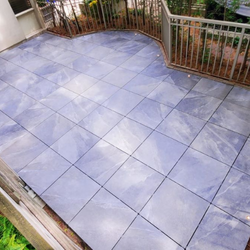
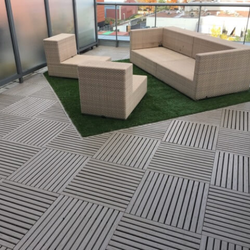
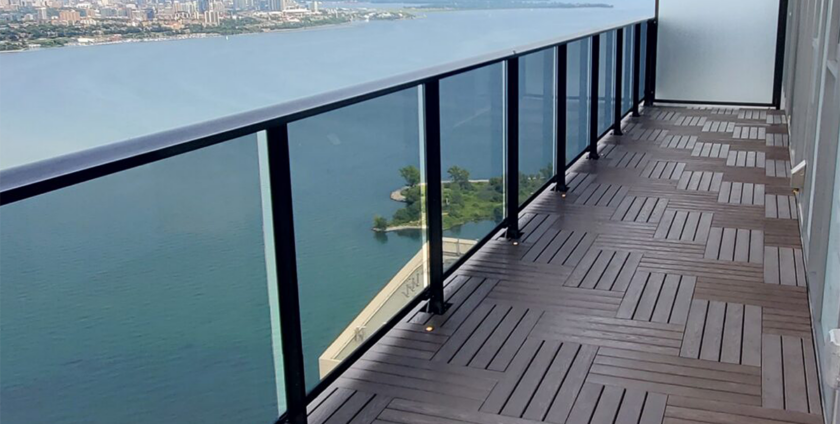
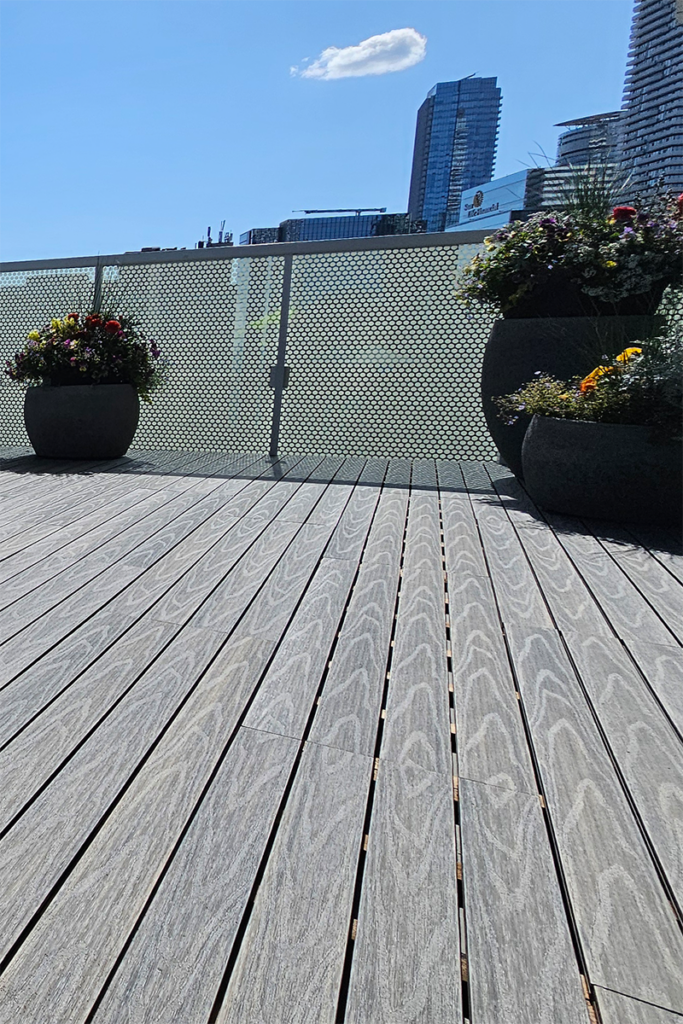
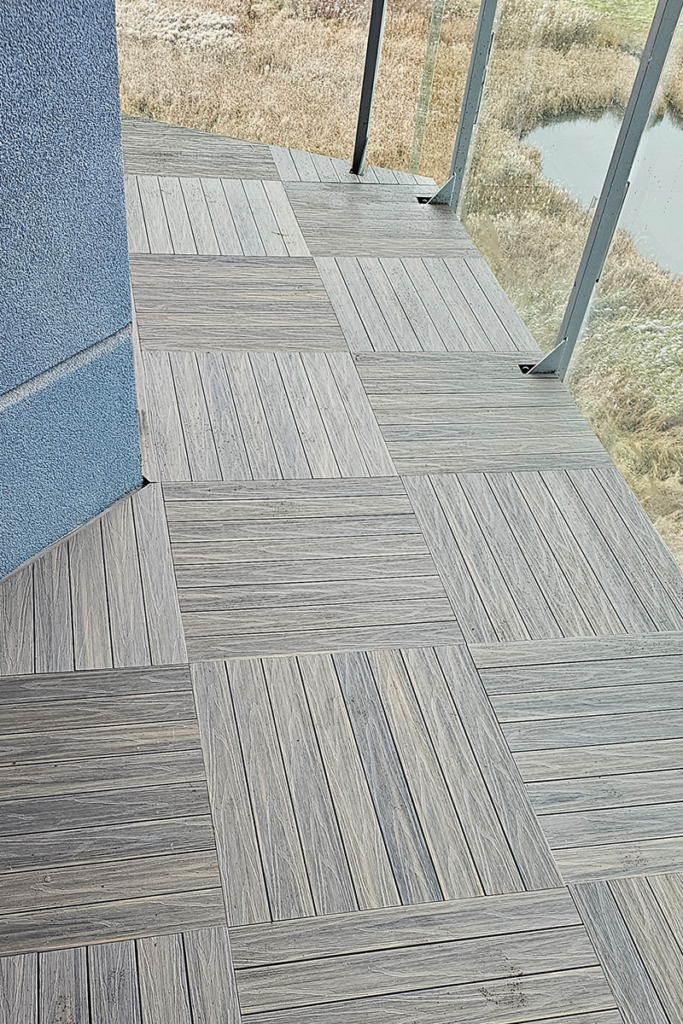
Interlocking deck tiles fall into the last two categories. They do not penetrate the slab. They are fully removable. They sit on integrated risers, so drainage is preserved. They weigh well within typical balcony load limits. And they are not visible from the street unless you are standing directly across from the balcony.
This is why Designer Deck — an ACMO Associate Member founded in 1983 — has been installed on thousands of Toronto condo balconies over four decades. Condo boards across the city are already familiar with the product.
The Approval Process Step By Step
For most Toronto condo corporations, the process looks like this:
- Check your condo declaration and rules for balcony provisions
- Fill out an alteration request form (your property manager provides this)
- Attach product specifications — weight per sq ft, installation method, material composition
- Attach a brief description of the work — “installing removable interlocking deck tiles on existing slab, no penetration, no adhesive”
- Submit to the property manager
- Receive board response — typically within two to four weeks
For buildings already familiar with Designer Deck (which is most of them in Toronto), approval is often faster because the board already has documentation on file.
Common Mistakes To Avoid
Installing without approval: Even if the product is clearly low-risk, installing without approval can result in an order to remove the installation at your expense. Always submit the form first. For interlocking tiles, approval is rarely refused — so waiting costs you nothing and protects you legally.
Using non-standard products: Lower-quality tiles without proper UV protection, drainage, or documentation get rejected more often than quality products. The corporation wants to see a real manufacturer with real specs.
Penetrating the slab: Any anchor, screw, or fastener into the slab almost guarantees a rejection and, if installed without approval, a forced removal and membrane repair bill.
What To Include In Your Alteration Request?
- Product name and manufacturer
- Material composition (porcelain, WPC, recycled plastic, etc.)
- Weight per square foot
- Installation method (specifically: no penetration, no adhesive)
- Warranty documentation
- Manufacturer’s insurance/liability documentation
- ACMO membership or industry affiliations
- Reference to other buildings in Toronto where the product is installed
Designer Deck provides all of this documentation on request for clients going through condo approval. Ask your project consultant during your free in-home consultation.
When You Might Get Rejected Anyway?
A small number of corporations have blanket restrictions on any balcony modification regardless of product. This is unusual in Toronto but does happen. If your condo has such a rule, you have two realistic options: request a by law amendment (a longer process) or work within the existing rules.
Frequently Asked Questions
Ques: How long does the condo approval process usually take?
Ans: Two to four weeks is typical for Toronto condo corporations. Faster for buildings that already have Designer Deck installations on file.
Ques: Can my neighbor object to my balcony installation?
Ans: Neighbors can raise concerns to the board, but the board decides. Interlocking tiles do not typically generate neighbor objections because they are not visible from other units and do not create noise or smell.
Ques: What if I install and then the board asks me to remove it?
Ans: This happens only when installation was done without approval or using a non-compliant product. Going through the approval process first prevents this entirely.
Ques: Does my tenant need approval if I am renting the unit out?
Ans: As the owner, you are the one responsible for approval. Tenants typically cannot alter the balcony without your written consent.