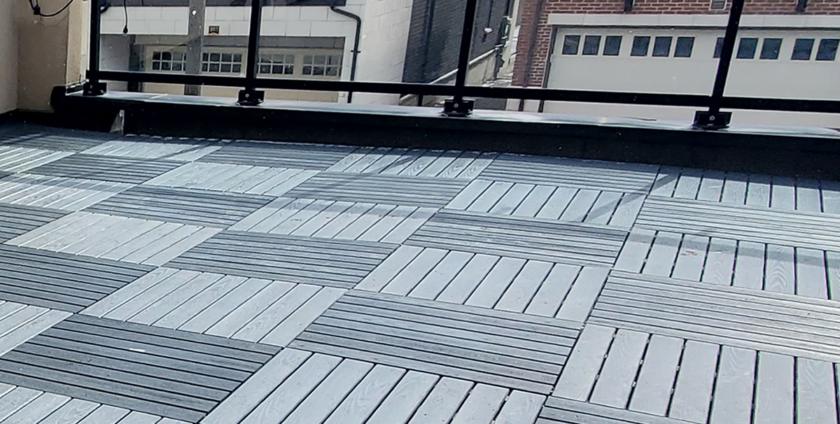
Would you like to browse our deck tile products and accessories?
Almost every flat rooftop terrace in Toronto is not actually flat. By design, rooftops slope to drain — usually 2% or more — and over decades most slabs develop additional unevenness from settling. Stand on most condo terraces with a marble and it will roll.
If you want a usable, comfortable rooftop, you need a level walking surface without destroying the drainage the roof was designed for. Here is how to do that without pouring new concrete, building a deck frame, or spending pedestal-system money.
Why Rooftop Terrace Are Uneven in the First Place?
1. Intentional slope for drainage: Flat roofs have a built-in slope of 2% minimum (1 inch of drop per 4 feet of length). This is how water gets to drains. Perfectly flat roofs would pond and fail.
2. Settled unevenness over time: Buildings settle. Concrete cures and shifts. Twenty years after construction, most slabs have additional dips and high spots that were not there originally.
3. Drain locations that are not lowest points: Sometimes drains were placed where building design required, not where slope naturally takes water. This creates low spots that hold water.
4. Damage and repair: Past membrane repairs or patched spalling can leave the surface noticeably uneven.
What Does NOT Work for Leveling?
1. Re-pouring the slab: Extremely expensive, requires engineering, breaks the waterproof membrane, and is almost never approved in condo buildings. Avoid.
2. Self-leveling concrete over the slab: Adds weight to the roof, cracks in freeze-thaw, and often voids the waterproof membrane warranty. Not recommended for rooftop terraces in Canadian conditions.
3. Building a framed wood deck: Works, but requires structural fasteners (usually prohibited), adds significant weight, and is overkill for most rooftops.
4. Outdoor rugs: Do nothing for leveling and trap moisture that makes the unevenness worse over time.
What Works — the Two Real Options?
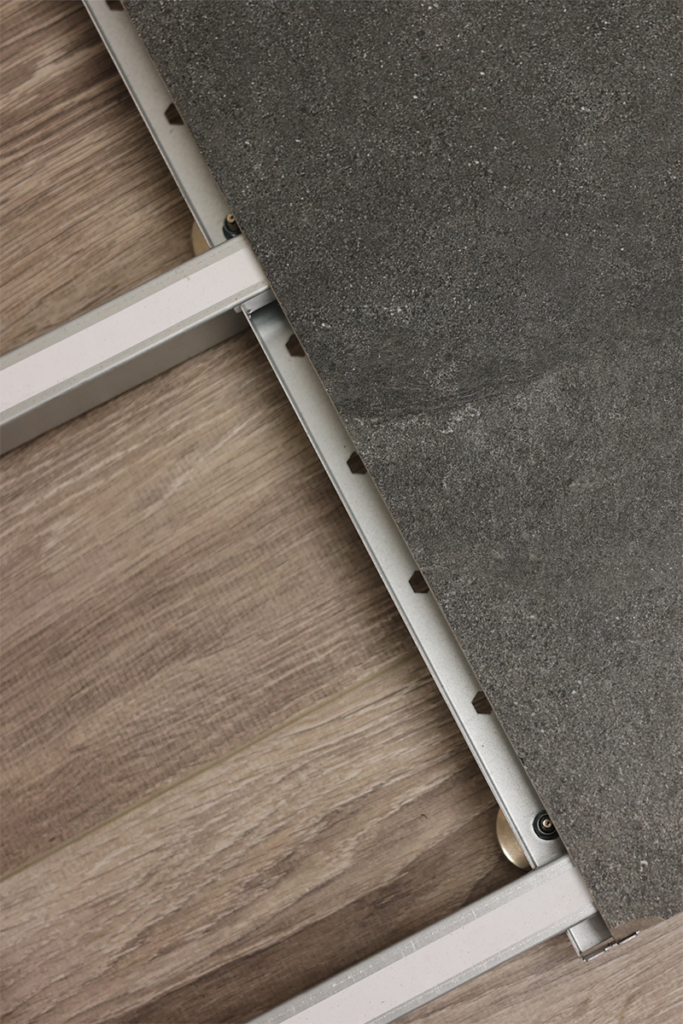
Option 1: Adjustable pedestal paver systems. Each paver sits on an adjustable pedestal. Installers turn the pedestal to compensate for low spots, creating a perfectly flat walking surface several inches above the roof. This is the traditional solution for severely uneven commercial rooftops and high-end residential projects.
Downsides: expensive (premium price point), slow installation, heavy, and difficult to maintain.
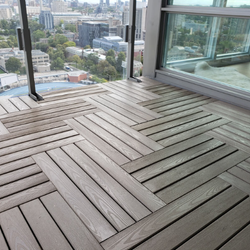
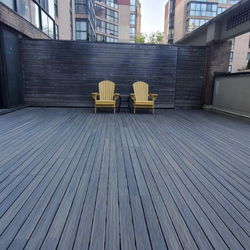
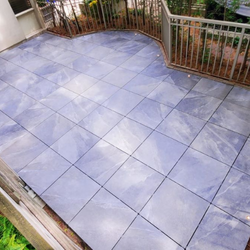
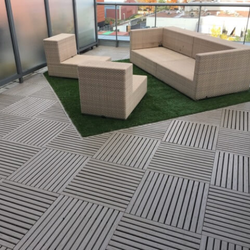
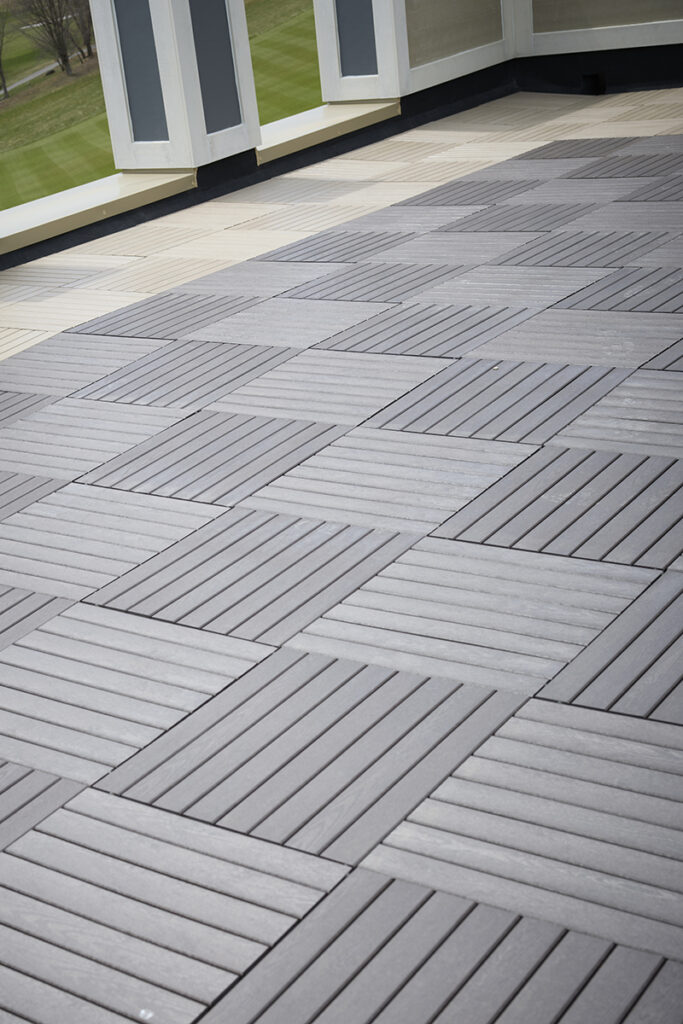
Option 2: Contoured tile installation with integrated risers. Designer Deck tiles sit on integrated risers and are professionally contoured to the surface. Rather than fighting the slope, the tile installation follows it — delivering a stable, finished walking surface while preserving the original drainage direction.
Downsides: does not produce a perfectly flat surface (but delivers a comfortable one for foot traffic). Not suitable for extremely severe slope conditions.
For 90%+ of residential rooftops, this is the right answer. It is faster, cheaper, and more drainage-friendly than pedestal systems.
When Pedestals Are the Right Call?
- Slope exceeds 4% (very uncommon in residential rooftop terrace)
- Large ponding areas that persist more than 48 hours (fix these first, then install)
- Design requires significant elevation above the existing roof
- Commercial applications with specific engineering requirements
When Contoured Tile Installation is the Right Call?
- Residential condo terraces, penthouses, and townhome rooftops
- Any rooftop under approximately 1000 sq ft
- Any rooftop with normal residential slope
- Projects where budget and installation speed matter
- Projects where maintenance access to the membrane matters
The Installation Process on an Uneven Rooftop Terrace
A quality installer walks the rooftop terrace first and identifies:
- The overall slope direction
- Any specific low spots or high spots
- Drain locations and active drainage paths
- Areas where additional support might help
Tiles are then laid following the natural slope, with supports or spacers added where needed to keep the walking surface feeling solid underfoot. The result is not a flat floor — it is a comfortable floor that drains correctly.
What You Get vs. What You Do Not Get
What you get:
- A stable, comfortable walking surface
- No more puddles on the surface
- Proper drainage to existing drains
- A finished, attractive rooftop
- Easy maintenance access
What you do not get (without pedestals):
- A perfectly flat, laser-level floor
- Significant elevation above the roof surface
For most owners, this trade-off is absolutely worth it. A comfortable, good-looking, well-draining rooftop that cost a fraction of what a pedestal system would have cost is usually the right answer.
Frequently Asked Questions
Ques: How much slope is too much for contoured tile installation?
Ans: Most residential rooftops (slope under 4%) work well with contoured installation. Severely sloped rooftops may need pedestals. We assess during the free consultation.
Ques: Can I make the surface more level with shims or spacers?
Ans: Professional installation includes targeted support where needed to keep the walking surface feeling solid. This is different from pedestal leveling — we are improving comfort, not creating a perfectly flat plane.
Ques: What if my rooftop terrace has a significant low spot that ponds?
Ans: Standing water underneath the tiles is a drainage problem, not a tile problem. Fix drainage first — usually a roofer’s work — then install tiles over the corrected surface.
Ques: Does contoured installation affect durability?
Ans: No. Tiles are designed to flex slightly with minor surface variation. Durability comes from material quality, not from being installed on a perfectly flat surface.