Would you like to browse our deck tile products and accessories?
Renting a condo in Toronto often comes with a concrete balcony that nobody wants to touch because nobody wants to lose their damage deposit. Landlords similarly worry about tenants damaging the slab with permanent installations. The result is that a lot of potentially great outdoor spaces sit unused because neither side knows what is actually safe.
Here is the guide for both renters and landlords on finishing a rental balcony without damage, without permanent modification, and without losing a deposit.
For Renters — What You Can and Cannot Do?
Generally safe (no permission needed for most leases):
- Furniture
- Planters
- Removable outdoor décor
- Freestanding screens or umbrellas
- Solar or battery-operated lights
Gray area (usually permitted but check first):
- Interlocking deck tiles (removable, no adhesive, no penetration)
- Outdoor rugs (some leases prohibit due to moisture issues)
- Freestanding privacy screens with weighted bases
Usually prohibited:
- Anything that screws, glues, or anchors to the slab
- Painted or coated surfaces
- Framed decks of any kind
- Plumbed-in fixtures
Why Interlocking Deck Tiles Are Renter-friendly?
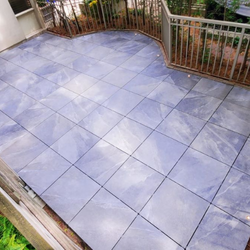
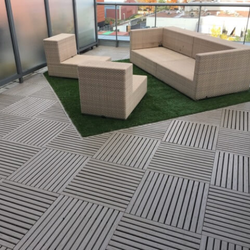
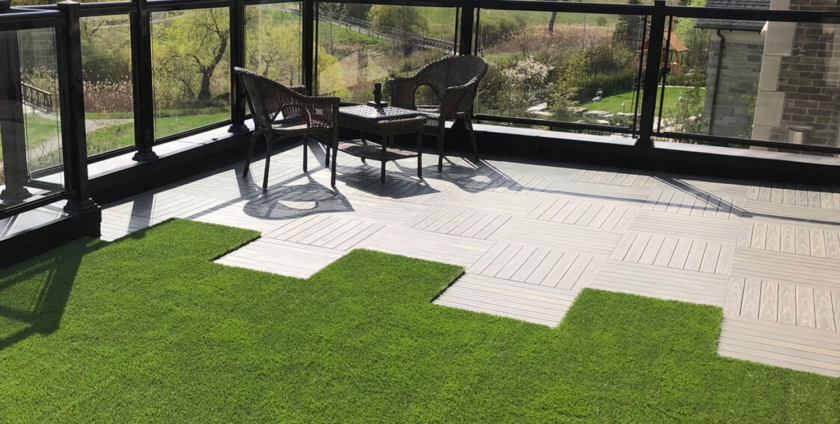
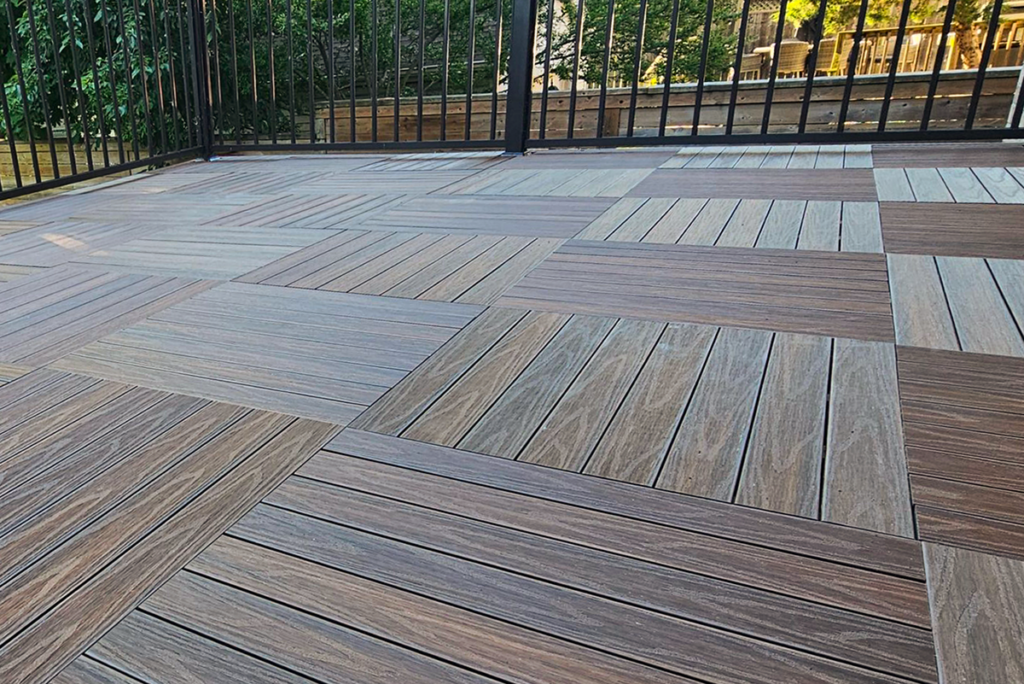
Interlocking tiles lift out as easily as they go in. No glue, no adhesive, no fasteners. When you move out, the tiles lift out in the same afternoon they took to install. The slab underneath is in the exact same condition as before — often cleaner because the tiles protected it from direct sun and weather.
For renters, this means:
- A finished balcony for the whole time you live there
- No damage to the slab (protects your deposit)
- Tiles come with you to your next place
- The value lives on rather than being left behind
What to Communicate With Your Landlord?
Even though non-permanent installations usually do not require landlord approval, a quick email protects you:
“I am planning to install removable interlocking deck tiles on the balcony. They do not penetrate the slab, do not use adhesive, and lift out when I move out. Happy to share product specs if helpful. Let me know if you have any concerns.”
Most landlords respond positively because the tiles protect their slab from weather and wear.
For Landlords — Why Allowing Deck Tiles is in Your Interest?
1. Tenant retention: A finished balcony is a real amenity. Tenants are more likely to renew leases on units that feel like real living spaces rather than storage pods with railings.
2. Slab protection: Deck tiles protect the concrete from direct UV exposure, rain, and freeze-thaw — the main causes of slab deterioration. Units with tiles over time have less concrete damage than units with bare slabs.
3. Zero long-term commitment: If the tiles are the tenant’s, they leave with the tenant. If they are yours (see below), they are a one-time investment that upgrades the unit for multiple tenants.
4. Higher rentability: A listing photo with a finished balcony generates significantly more interest than one with a bare slab.
For Landlords — Should You Install Tiles Yourself?
Many landlords of condo rental units are finding that installing quality deck tiles themselves pays back quickly:
- Unit shows better in listings, rents faster
- Commands slightly higher rent
- Protects slab from weathering between tenants
- One-time cost, amortized across many tenancies
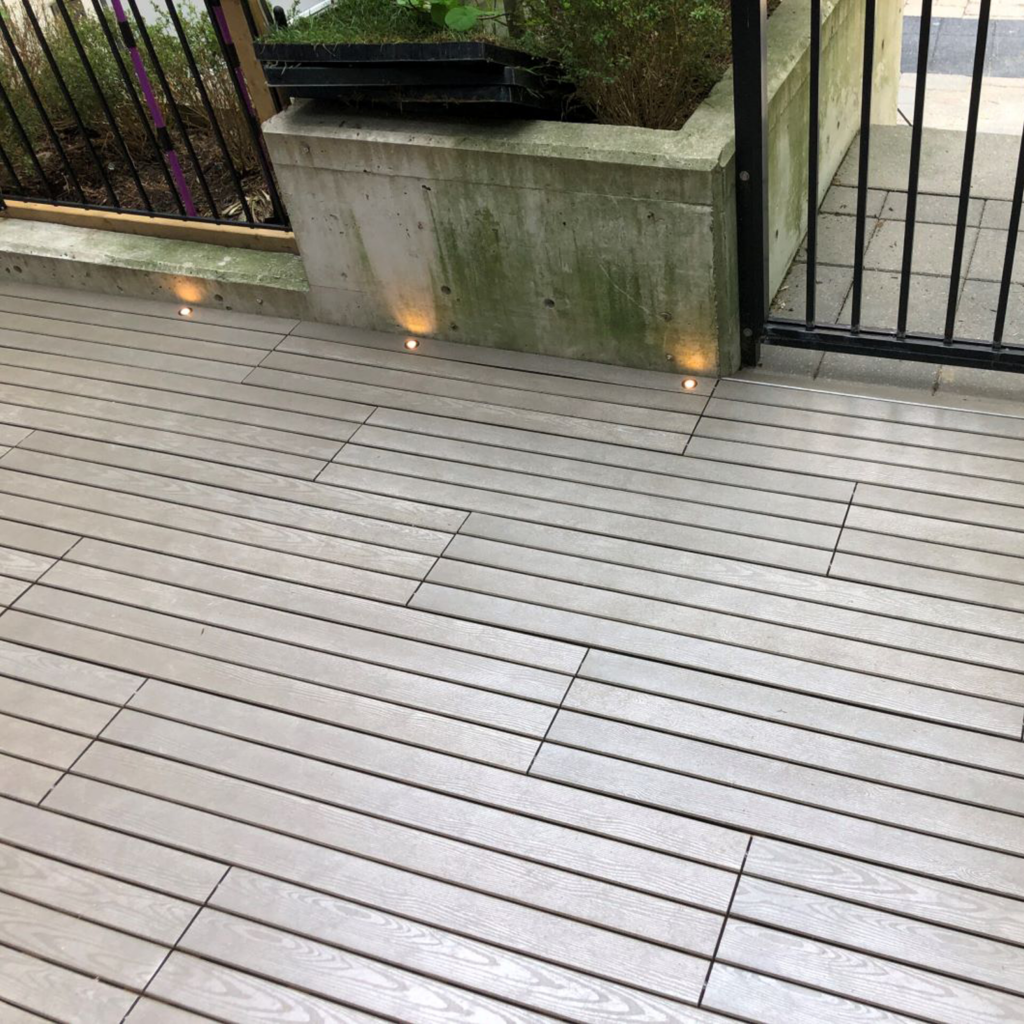
Quality tiles like Designer Deck WPC or recycled plastic survive multiple tenancies and still look good years later. The incremental rent and improved tenant retention usually cover the installation within 18–24 months.
For Airbnb and Short-term Rental Hosts
Airbnb and Vrbo hosts with balconies have an even stronger case. A finished, photogenic balcony:
- Photographs beautifully (drives bookings)
- Increases nightly rates
- Generates better reviews
- Differentiates the listing from competitors
The investment pays back faster with short-term rental economics than with long-term leases.
What Renters Should Look for in Their Choice of Tile?
- Truly removable (no adhesive, no fasteners)
- Weight within typical balcony load limits
- UV-protected for long tile life
- Quality documentation (for condo board approval if required)
- Canadian-made for freeze-thaw durability
These specs describe Designer Deck tiles — which is why the product has been chosen by thousands of renters, landlords, and short-term rental hosts in Toronto.
Moving Out — the Process
When you move, the process is:
- Lift tiles off the slab (10–30 minutes for a typical balcony)
- Stack them for transport (they are light and stackable)
- Sweep or hose off the slab underneath
- Take tiles with you to the next place
The slab underneath is typically cleaner than it would have been without the tiles, because the tiles protected it from weather and sun.
Frequently Asked Questions
Ques: Do I need written permission from my landlord to install removable deck tiles?
Ans: Check your lease for specific provisions about balcony modifications. For most standard leases, non-penetrating and non-permanent changes are permitted, but a brief email to your landlord protects you and builds goodwill.
Ques: Will deck tiles stain the concrete underneath?
Ans: No. Quality interlocking tiles with riser systems allow water and air to flow underneath, preventing the moisture trap that causes staining. The slab is often cleaner when the tiles come up than when they went down.
Ques: Can I sell the tiles to the next tenant?
Ans: Yes, and many renters do exactly this. It can offset the moving-out cost.
Ques: How long does it take to remove the tiles at move-out?
Ans: A typical condo balcony can be cleared in under 30 minutes. Tiles stack easily for transport.