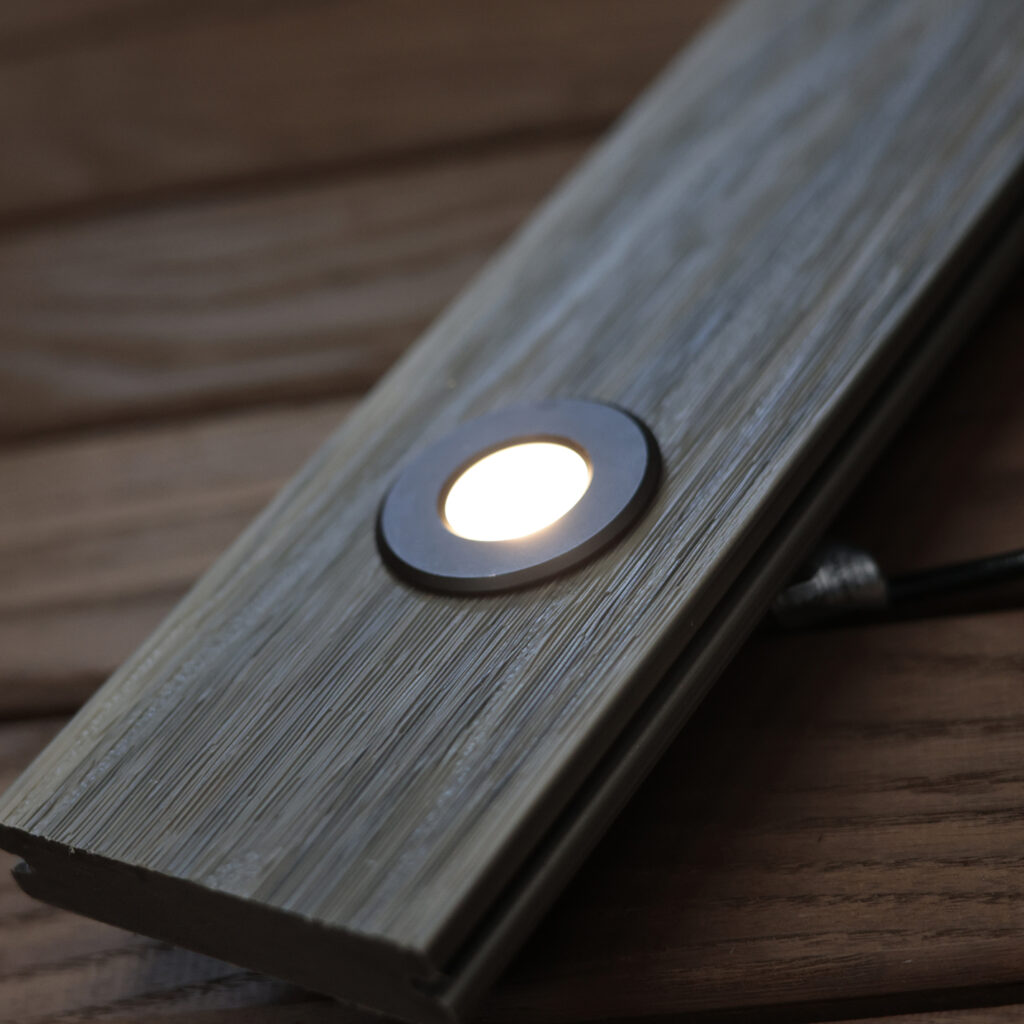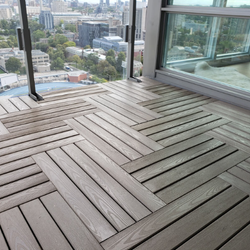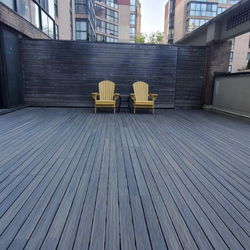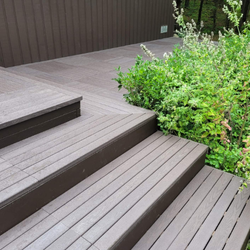
Would you like to browse our deck tile products and accessories?
The rooftop paver industry has spent decades convincing consumers that you need adjustable plastic pedestals to finish a rooftop properly. For high-end large-format stone installations, pedestals do have their place. For most residential and commercial rooftop terraces, they add thousands of dollars without adding much value.
Here is a straight explanation of what pedestals actually do, why Designer Deck’s integrated riser system delivers the same benefit without the pedestal price, and where pedestals still make sense.
What Pedestals Actually Do?
Adjustable pedestals do three jobs:
- Level the walking surface on a sloped roof
- Create an air and water gap underneath for drainage
- Support large, heavy stone slabs
The value is in the combination. A single pedestal supports the corner of four adjacent pavers simultaneously, keeping them stable and level even when the roof underneath is not flat.
What Pedestals Cost?
Pedestal systems add significantly to rooftop project costs. You are paying for:
- The pedestals themselves (dozens or hundreds per project)
- The premium large-format stone pavers designed to sit on them
- Specialized installation labour (pedestal leveling takes time)
- The engineering for heavy-load applications
Total cost for pedestal systems lands in the premium price band — often 2x to 3x what an equivalent interlocking deck tile installation would cost.
How Designer Deck’s Integrated Riser System Works?
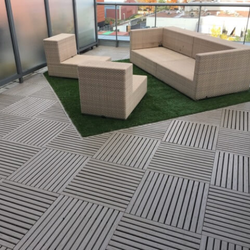
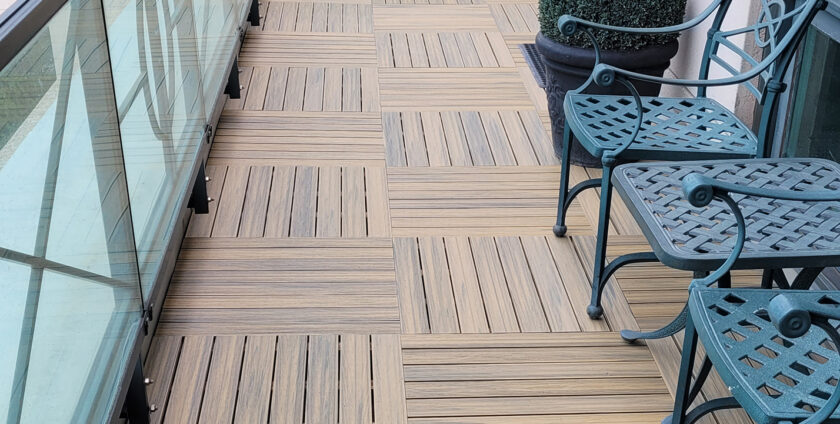
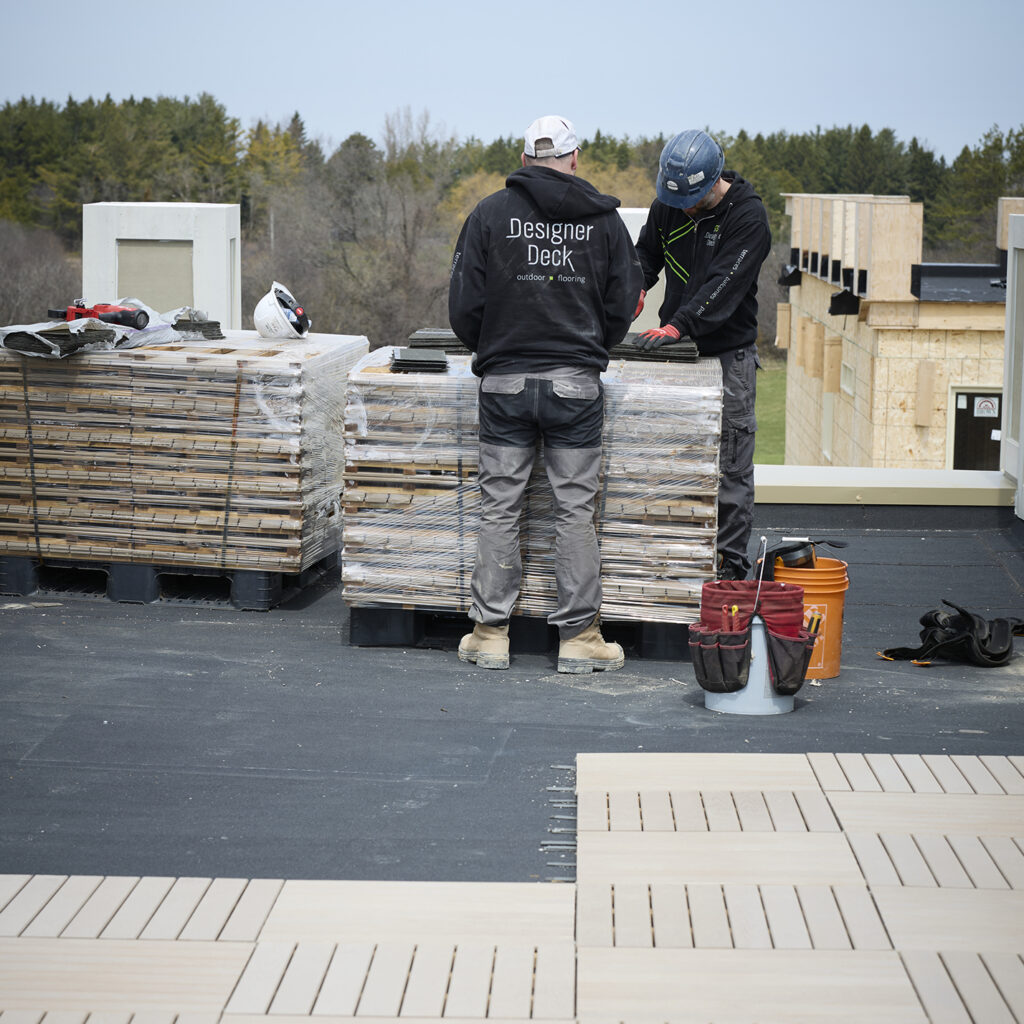
Every Designer Deck tile has integrated risers built into the base. These small feet lift the tile off the slab by a controlled amount, creating the same air and water gap that pedestals create — without the separate pedestal.
The key difference: instead of trying to create a perfectly flat elevated surface, our installers contour the tiles to follow the natural slope of the roof. Water drains where the roof is designed to drain it. No pedestal adjustment required.
Why Contouring Works Better Than Leveling (for Most Rooftops)?
Flat roofs are designed to drain. The slope — even a shallow 2% slope — moves water toward drains. Pedestal systems work against this by creating a perfectly flat elevated surface where water still has to find its way to drainage points.
Contoured tile installation works with the slope. Water hits the tile surface, flows underneath the tiles following the same slope the roof was designed with, and reaches the drains naturally. Drainage is actually more efficient than with pedestals.
When Pedestals Still Make Sense?
Pedestals are the right choice in a few specific scenarios:
- Very large format pavers (24×24 inches or larger) that are too big for interlocking systems
- Severely uneven rooftops where the slope exceeds what contouring can handle
- Commercial installations with specific engineering requirements
- Design requirements for a significant elevation above the roof surface (several inches)
For these cases, pedestal systems do what they do well. Designer Deck does not attempt to replace pedestal systems in these applications.
When Our Riser System is the Better Choice?
- Residential rooftop terraces up to about 1000 sq ft
- Condo penthouse terraces
- Townhome rooftops
- Small commercial patios
- Any project where budget matters
- Any project where installation speed matters
- Any project where future maintenance access is important
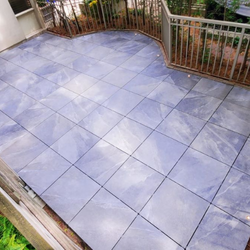
Our porcelain line (Porsets) specifically delivers the premium stone-look aesthetic without requiring a pedestal system — at a fraction of the cost.

The Maintenance Difference
When something goes wrong on a pedestal paver rooftop — a cracked paver, a membrane that needs inspection, an obstruction underneath — you are looking at lifting multiple heavy slabs and coordinating pedestal reinstallation. Professional work, several hours minimum.
With Designer Deck interlocking tiles, one person can lift and replace a single tile in under a minute. Membrane inspection? Lift the tiles in a section, inspect, put them back. No specialized equipment needed.
Cost Comparison on a 400 Sq Ft Rooftop
The exact difference depends on product choice and site conditions, but as a rule of thumb:
- Pedestal paver system: premium price point
- Designer Deck porcelain tiles: mid-to-premium price point (still significantly less than pedestal pavers)
- Designer Deck WPC or recycled plastic: mid-range or budget-friendly
On a typical residential rooftop, the savings versus pedestal pavers can run into the thousands.
Frequently Asked Questions
Ques: Do I lose any functionality by skipping pedestals?
Ans: For most residential and commercial rooftops under 1000 sq ft, no. Drainage, durability, and appearance are all comparable. You lose the specific aesthetic of very-large-format stone slabs if that matters for your project.
Ques: Can I upgrade from interlocking tiles to pedestals later if I need to?
Ans: Yes. Tiles lift out and pedestals can be installed on the same slab. Design flexibility is a benefit of choosing modular systems.
Ques: Is the riser gap enough for proper drainage?
Ans: Yes. Designer Deck risers create the clearance needed for water and air flow. The smaller gap compared to pedestals actually reduces debris buildup underneath over time.
Ques: How much weight can the riser system handle?
Ans: Our products support full residential and light commercial foot traffic, outdoor furniture, and planters. For heavier commercial applications or specific engineering requirements, speak with our team during consultation.